
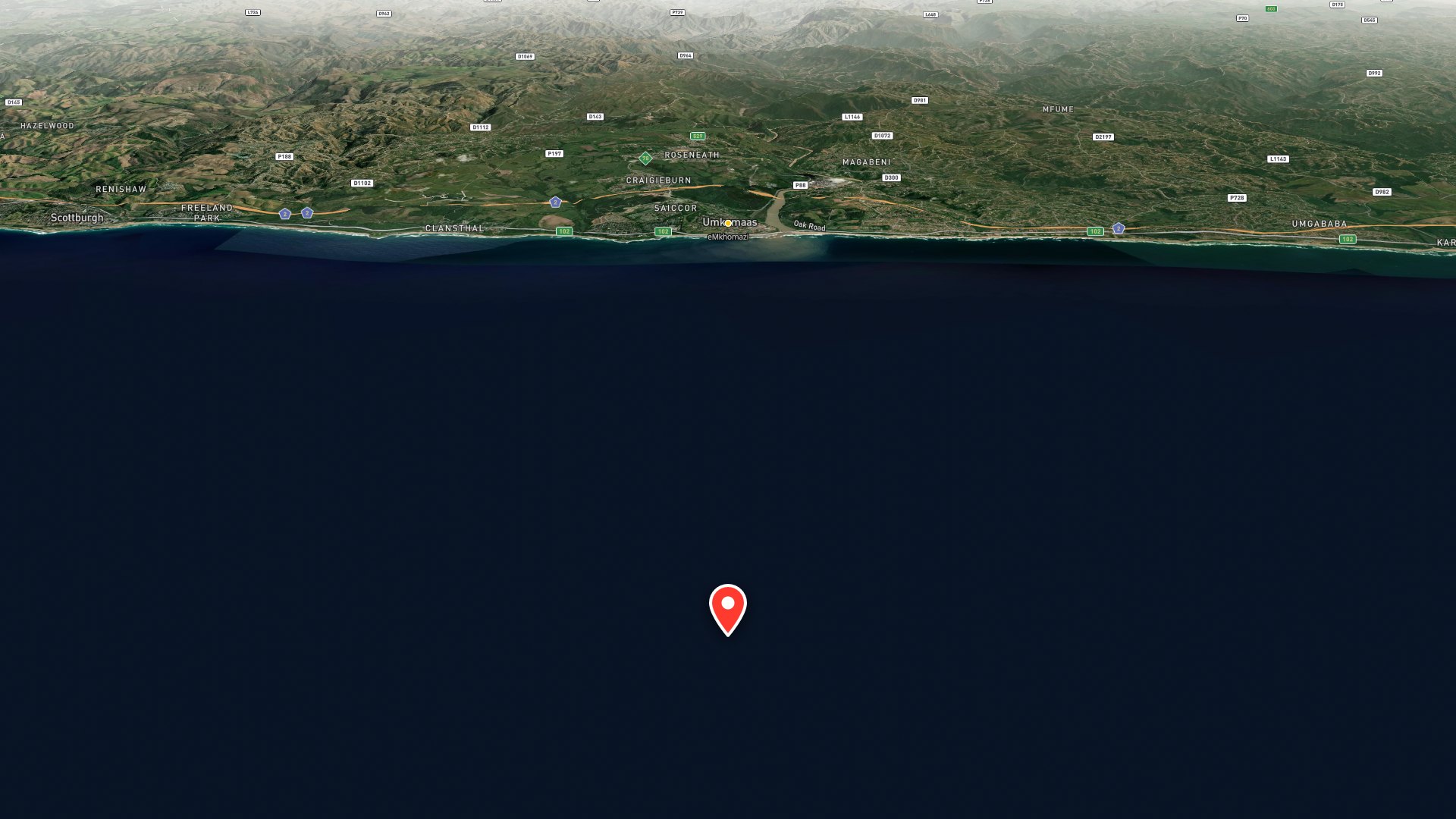
Aliwal Shoal is a rocky reef — the remains of an ancient sand dune — lying approximately 5 kilometres off the coast of KwaZulu-Natal, South Africa. It takes its name from the near-sinking in 1849 of the three-masted vessel Aliwal, captained by James Anderson. Today it is a Marine Protected Area, safeguarding hundreds of species of fish and marine mammals — and one of the most electrifying dive destinations on the planet.
The Reef
The reef is inhabited by many kinds of hard and soft corals and a variety of tropical and subtropical fish species. The Crown — the most dived section — varies in depth from about 6 m around the Northern Pinnacles to around 30 m on the seaward side, with a mean depth of roughly 12.5 m. In the Crown area, dive sites such as Raggie Cave and Chunnel feature dramatic topography — small caves, ledges, and swim-throughs rich in both fish and invertebrates. Cathedral is a highlight: a large, naturally formed archway in the reef that resembles the shape of a cathedral window.
Marine Life
The abundance and diversity of marine life here is phenomenal. It's not unusual to see up to seven species of shark in a single dive — ragged-tooth sharks (grey nurse sharks) migrate here in winter for mating, while whitetip reef sharks are present year-round, hammerheads pass through on migration, and bull (Zambezi) sharks, tiger sharks, and oceanic blacktip sharks are all regular visitors. Beyond the sharks, expect eagle rays, manta rays, hawksbill and green turtles, bottlenose dolphins, humpback and southern right whales, goliath groupers, moray eels, nudibranchs, and a wealth of macro life. November through to the end of March are particularly good months for sharks, with strong chances of tiger, bull, and hammerhead sightings.
Wrecks
Two wrecks lie near the reef: the Norwegian bulk carrier MV Produce, which sank in 1974, and the British steamer SS Nebo, which sank in 1884. The MV Produce struck the northern end of the shoal while carrying a load of molasses; she now rests on her starboard side in roughly 32 m of water and stretches about 120 m in length. Over the years, the wreck has become heavily encrusted with corals and sponges, and divers can expect schooling fish, potato bass, moray eels, scorpionfish, and ragged-tooth sharks resting inside the structure in winter. It is best suited for advanced divers due to its depth and occasional current, but is widely regarded as one of the top wreck dives in South Africa. The Nebo is more broken up but equally rich in marine life — look out for resident turtles, moray eels, butterfly rays, nudibranchs, and schools of game fish weaving through the wreckage.
Conditions & Access
Visibility averages 10–20 metres, and water temperatures range from 20 °C in winter to 26 °C in summer — with the warmer months running November through April in the Southern Hemisphere. Be aware that strong currents and occasional poor visibility can affect conditions. RIBs (rigid inflatable boats) are launched from the beach into the surf, with backward-roll and negative entries the norm — a reliable indicator that this is a site that rewards experience and preparation. Umkomaas, the gateway town, is a quiet base with dive lodges, guesthouses, and friendly local eateries. The easiest way in is to fly to King Shaka International Airport in Durban and drive roughly one hour south along the coast to Umkomaas. All dive sites fall within the Aliwal Shoal Marine Protected Area, and a permit is required to dive here.
Recommended ISC Certifications
Aliwal Shoal suits divers who come prepared. Here are the ISC courses that will serve you best:
Advanced Diver — The shoal suits more experienced divers; conditions can be quite dynamic, with changing visibility and currents. An Advanced Diver certification is the essential foundation before heading out here.
Deep Diver — The ISC Deep Diver course teaches you to dive efficiently and safely to 30 m / 40 m, putting the MV Produce wreck at 32 m and the deeper reef slopes firmly within reach.
Wreck Diver — ISC's Wreck Diver course is the natural complement to any Aliwal trip, preparing you to safely explore the Produce and Nebo with the skills and awareness these historical dives demand.
Drift Diver — Strong currents are a real feature here, and the ISC Drift Diver course gives you the techniques to work with them confidently rather than against them.
Nitrox Diver — ISC's Nitrox Diver course extends your no-decompression limits — especially useful on the deeper wreck dives and when making multiple dives a day to maximise your shark encounters.
Boat Diver — Every dive here departs by RIB through the surf; the ISC Boat Diver course is a core essential that covers the entry and exit techniques, boat protocols, and situational awareness you'll use on every Aliwal dive.
Likely seen here
Species whose range and habitat make them likely at this site — not yet confirmed by a logged sighting.