
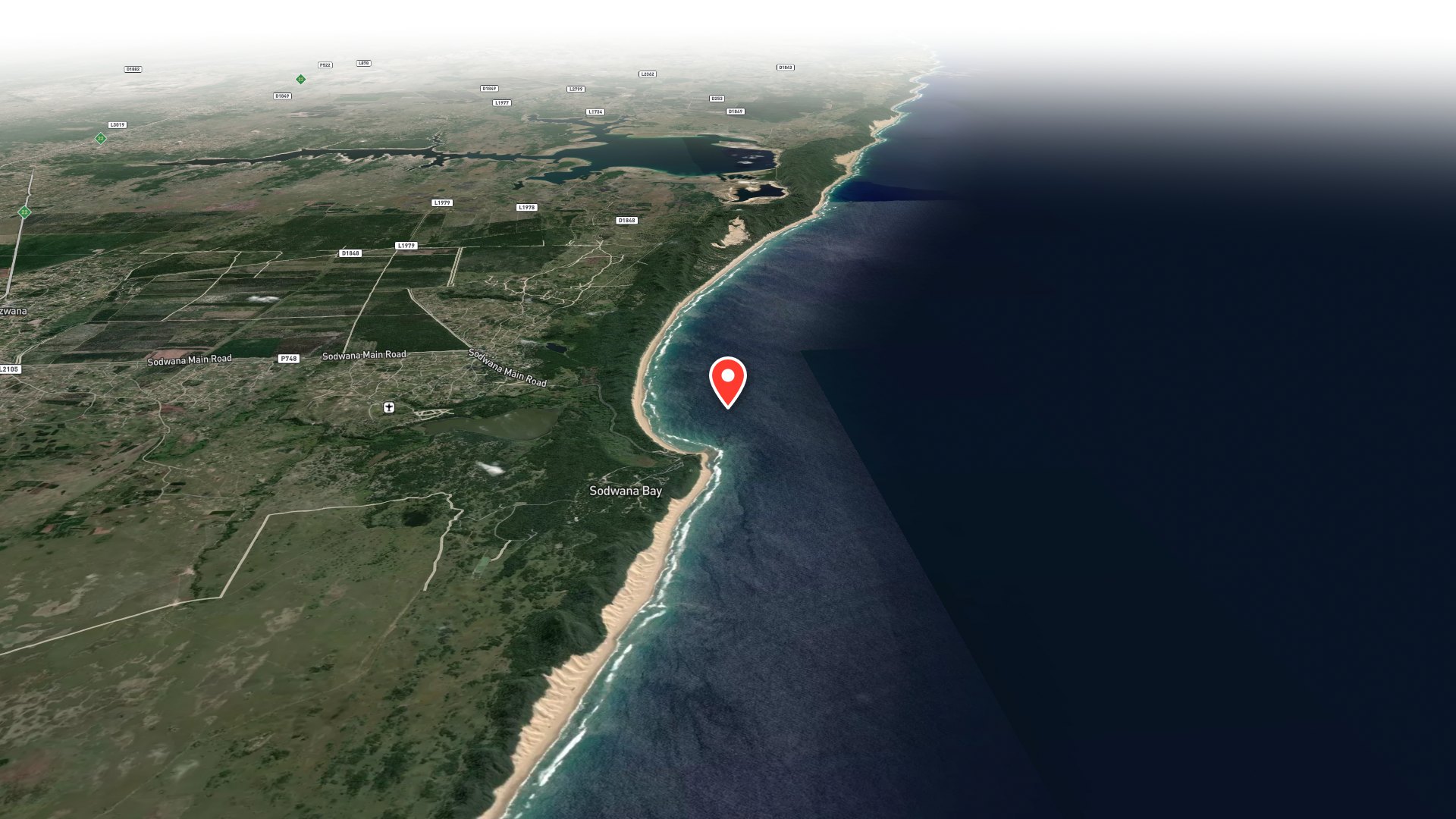
Classified as one of the top dive sites in the world, Sodwana Bay attracts some 35,000 scuba divers every year — and at the heart of it all sits 2 Mile Reef, the jewel in the crown. If the other reefs of Sodwana are villages, 2 Mile Reef is London — about two kilometres long and one kilometre wide, with more than thirty individual dive sites packed into its boundaries. You could fill an entire week here and still surface with something new.
Topography & Depth
Stretching for over 1.8 km long and almost 900 metres wide in places, 2 Mile Reef is a vast reef complex with varied topography ranging from pinnacles to swim-throughs, rocky outcroppings, large sand patches, and caves. It is the largest reef system in Sodwana, with depths ranging between 8 m and 35 m and quite dramatic topography. Shallower sections make it welcoming for newly certified divers, while the outer edge gradually drops deeper into what's known as Sponge Reef, with Deep Sponge — a popular dive site — sitting at 32 metres.
Marine Life
The reefs of Sodwana Bay are formed from fossilised sand dunes densely covered with hard and soft tropical corals — the world's most southerly coral reefs after those of Lord Howe Island — and they thrive on nutrient-rich upwelling from deep canyons close to shore, supporting everything from nudibranchs and reef fish to pelagics and occasional manta rays and whale sharks. On 2 Mile specifically, you can expect to encounter snapper, moray eels, nudibranchs, potato bass, trumpetfish, frogfish, angelfish, surgeonfish, clownfish, and shrimp. Named dive sites each have their own character: Anton's is home to large numbers of schooling fish, turtles, and bait balls, and is fed by north–south currents rich in nutrients, attracting large schools of slingers and vibrant humpback snapper. At Simon's Cave there are sprawling colonies of anemones and large schools of butterflyfish, while Pinnacles features a collection of underwater pillars with swim-throughs and a small cave sometimes occupied by whitetip reef sharks. When there is a current running, the many adjacent dive sites lend themselves perfectly to a drift dive, letting you cover multiple sites in a single tank.
Conditions & When to Dive
Sodwana offers excellent visibility, often exceeding 20 metres, and warm waters between 20 °C and 28 °C, providing ideal conditions for divers of all levels. The warmest water is found from November to April, while visibility — good year-round — is often best between April and September, reaching up to 30 metres. Plan your trip around what you most want to see: humpback whales migrate through from June to October, loggerhead and leatherback turtles nest from November to February, and whale sharks and manta rays are spotted year-round but more frequently in winter.
Access & Practicalities
Most dives are short RIB rides from the beach to the famous reef ladder — the signature twist being the surf launch, where boats punch through the shore break at dawn before dropping you onto warm-water reefs shaped by the Mozambique Current. A permit is required to scuba dive within the iSimangaliso Marine Protected Area; annual permits are available at some Post Office branches, while temporary monthly permits can often be obtained directly from dive operators on site. Multiple experienced operators run guided boat dives, equipment hire, and gas fills from the beach.
Recommended ISC Certifications
ISC Open Water Diver — the entry-level certification needed to dive the shallower sections of 2 Mile Reef; Two Mile Reef is a perfect starting point for beginners, with its shallow depths and gentle currents providing a safe environment to learn and explore.
ISC Boat Diver — essential for Sodwana, where all dives are reached by short RIB rides from the beach. Understanding boat protocols, surf entry/exit procedures, and jump-entry techniques makes every dive smoother and safer.
ISC Deep Diver — recommended for those targeting the outer reef and Deep Sponge sites; the ISC Deep Diver course teaches you how to dive efficiently and safely at depths of 30 m / 100 ft or 40 m / 130 ft below the surface.
ISC Nitrox Diver — most parts of the deeper reef systems are perfect for nitrox, extending your bottom time on the shallower coral gardens and letting you make the most of every dive day.
ISC Night Diver — night dives here are excellent due to the calm sea conditions; you can watch corals expanding their polyps to feed after dark, and the reef transforms into an entirely different world after sunset.