
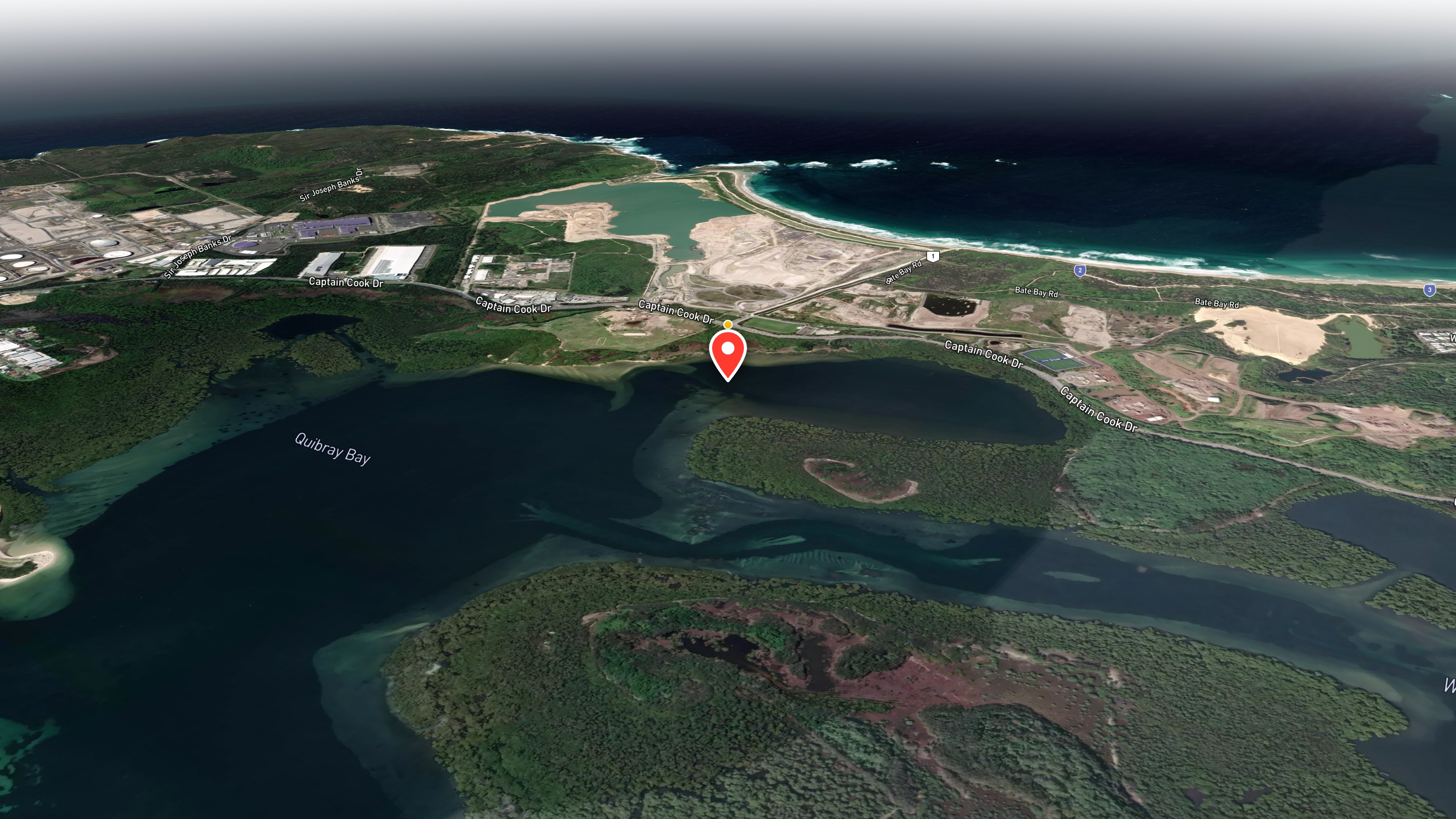
Kurnell sits within Kamay Botany Bay National Park and is renowned for its diverse shore dives and abundant marine life. Perched on the southern headland of Botany Bay — just opposite the suburb of La Perouse — it is one of those rare places where world-class temperate-reef diving begins the moment you step off the rocks. The area is home to two popular shore dives: Kurnell Monument and Kurnell Steps.
The Dive Sites
The Steps is widely considered the standout site at Kurnell. It is best known as one of the most reliable places in Australia to find weedy seadragons — so thick with them it is often called the Home of the Weedy Seadragon. The dive opens onto a sandline at around 12 metres, with kelp-draped boulders and sponge-covered rock shelves spreading east and west. Heading east takes you through gradually deepening terrain rich with seadragons and macro life, while heading west reveals interesting boulders, swim-throughs and a more sheltered landscape. To reach the water, park at Inscription Point Car Park on Cape Solander Drive and descend a substantial staircase — including steel steps and a bridge — down the cliff face to the entry point.
Monument faces northwest and is essentially a drift along the beachside. It is the more sheltered of the two, making it a reliable fallback when The Steps is exposed. It rewards nudibranch enthusiasts especially, but also offers weedy seadragons, bull rays, pygmy pipehorses, giant cuttlefish and, during very specific times of year, ghost pipefish. Sheer walls and impressive underwater topography round out the experience — pause to take in the sponge gardens and towering rock structures in clear conditions.
Marine Life
Beyond seadragons, the sites produce pygmy pipehorses, nudibranchs, Port Jackson sharks, wobbegongs, giant cuttlefish, bull rays, moray eels, blue gropers and occasional visiting schools of kingfish. Weedy seadragons become increasingly active in kelp gardens during autumn months, particularly at Kurnell. Patient macro photographers willing to move slowly will find the variety here genuinely extraordinary.
Conditions & Access
The best time of year to dive Kurnell is winter, when southerly swells bring beautifully clean water and visibility often reaches in excess of 15 metres. Water temperature reaches up to 21°C in summer and early autumn, dropping to 14–18°C in winter. Most divers will be comfortable in a 5–7 mm wetsuit, with a hood recommended for longer dives or anyone who feels the cold.
When the tide is going in or out it can create a strong drift — fighting a current that wants to take you out to sea is not pleasant. Monument faces northwest and dives like a drift along the beach side, while The Steps faces northeast and is more exposed to tidal flow in and out of the bay. Timing your dive to the tidal tables is essential. Due to boat traffic and open-ocean conditions, carrying an SMB is essential for all dives.
Recommended ISC Certifications
Most of Kurnell's sites are shore dives within recreational depths, accessible to Open Water Diver certificate holders in suitable conditions. The following ISC specialties will sharpen your skills and genuinely enhance your time in the water here:
Recorded here
Marine life divers have actually logged at this site.