
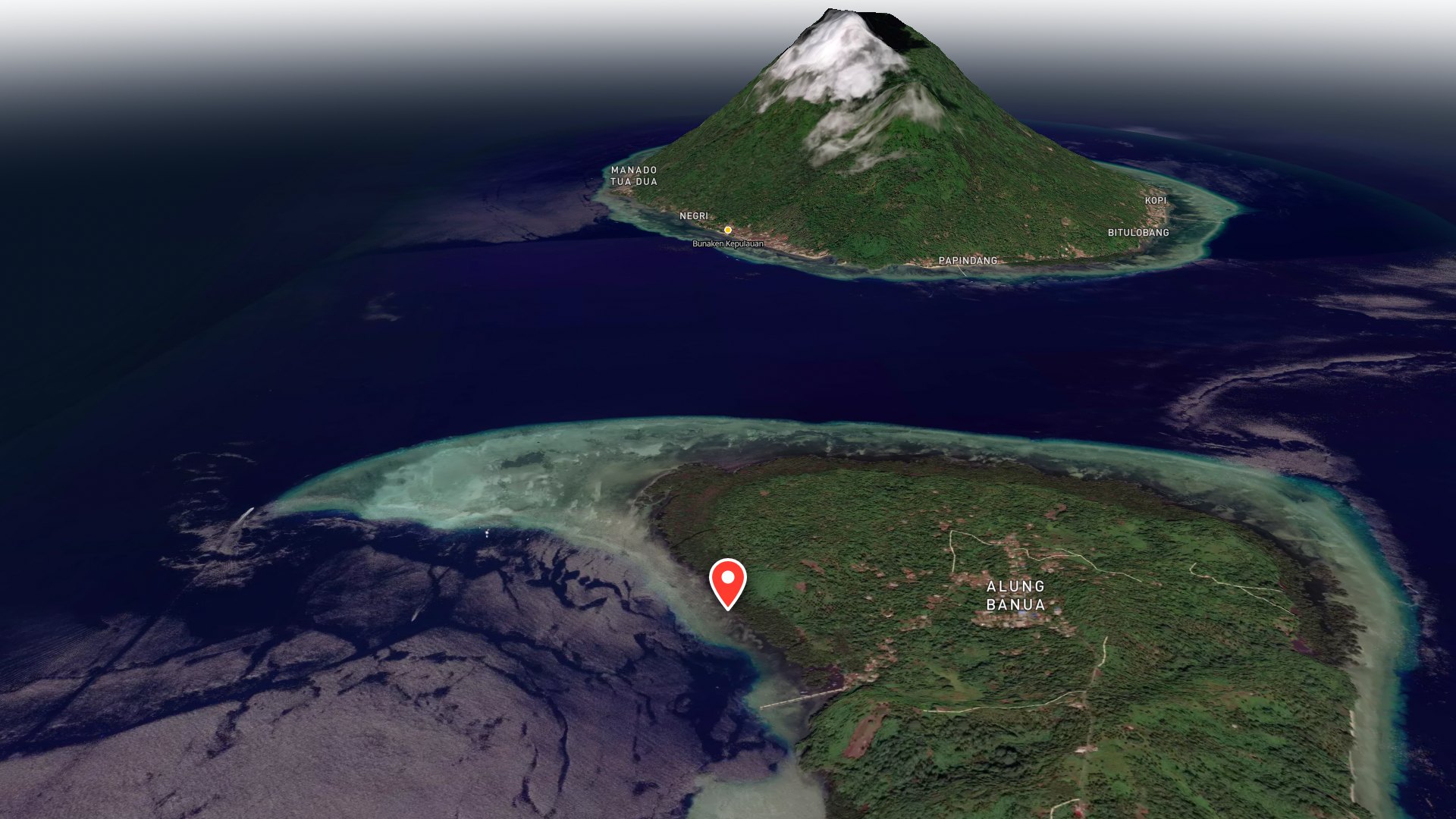
Fukui Point is the odd one out in the best possible way. It is the only sloping reef in Bunaken — every other dive site in the park is a wall — named after a Japanese diver who discovered the spot many years ago. While Bunaken's famous walls draw the headlines, Fukui's gently cascading slope rewards patience and curiosity in equal measure, making it beloved by first-timers and seasoned macro hunters alike.
The Dive
Descending from the boat, you arrive above the mooring blocks at a shallow, sandy flat — a superb spot for macro photography, with nudibranchs scouring the bottom. Swimming eastward, you descend to around 15 metres, where staghorn coral gives way to an impressive slope blanketed in cabbage corals. Further along the slope lies a group of jaw-droppingly large giant clams, followed by a small plateau of carpet anemones and enormous barrel sponges. Fukui's deeper bommies serve as cleaning stations for large pelagic fish — giant trevallies, Napoleon wrasses, and supersized snappers make their most reliable appearances here during early morning dives. Once you complete the loop of the dive, you return to the sandy shallows, where your safety stop practically takes care of itself — a perfect opportunity to inspect the small artificial reef and watch garden eels peeking from the sand.
Marine Life
A diver in the vicinity of Fukui may spot over 33 species of butterflyfish, along with numerous types of groupers, damsels, wrasses, and gobies. Green turtles, white- and black-tip reef sharks, eagle rays, Napoleon wrasse, nudibranchs, shrimps, crabs, and pygmy seahorses are all on the checklist. A sandy area is home to a colony of garden eels, and at 20–22 metres, five massive Tridacna giant clams — each around a metre across — lie in a row. Stripped catfish have also been seen moving in unison across the reef, feeding en masse.
Conditions & Access
Current is usually zero to mild, but can build to medium-strong — especially towards the corner where the cleaning station and reef edge meet. Fukui can get busy, so it is best visited in the afternoon when there are fewer boats and the light is better. The site is only about a 20-minute boat ride from the dive resorts in Manado, making it an easy day trip. Visibility is best from March through October, often reaching 30 metres or more; November to February brings a little more rain but diving continues daily, with water temperature a consistent 27–30 °C year-round. A 3 mm wetsuit is all you'll need on every occasion.
Recommended ISC Certifications
Fukui's forgiving slope and calm-to-mild conditions make it accessible to almost every level of diver, but the following ISC courses will help you get the very most from this site:
ISC Open Water Diver — Fukui is a spectacular dive with a wide range of wildlife and a perfect place for divers of any skill level to practise. The Open Water certification is all you need to get in the water here.
ISC Advanced Diver — The deeper bommies and cleaning stations reward divers comfortable pushing beyond the shallows, and the Advanced Diver course builds the skills and depth experience to explore them confidently.
ISC Nitrox Diver — ISC's Nitrox Diver course is ideal for this kind of multi-dive tropical destination: extended no-decompression limits mean longer bottom time on the slope to track down those giant clams and cleaning-station pelagics.
ISC Optimum Buoyancy — Precise buoyancy control is essential above the sandy flat and delicate coral gardens; ISC's Optimum Buoyancy course ensures you hover effortlessly without disturbing the garden eels or the reef below.
ISC Boat Diver — All access to Fukui is by boat. The ISC Boat Diver course is a core essential for any diver starting out in scuba diving from a live-aboard or resort dive deck, covering entries, exits, and on-board safety procedures.