
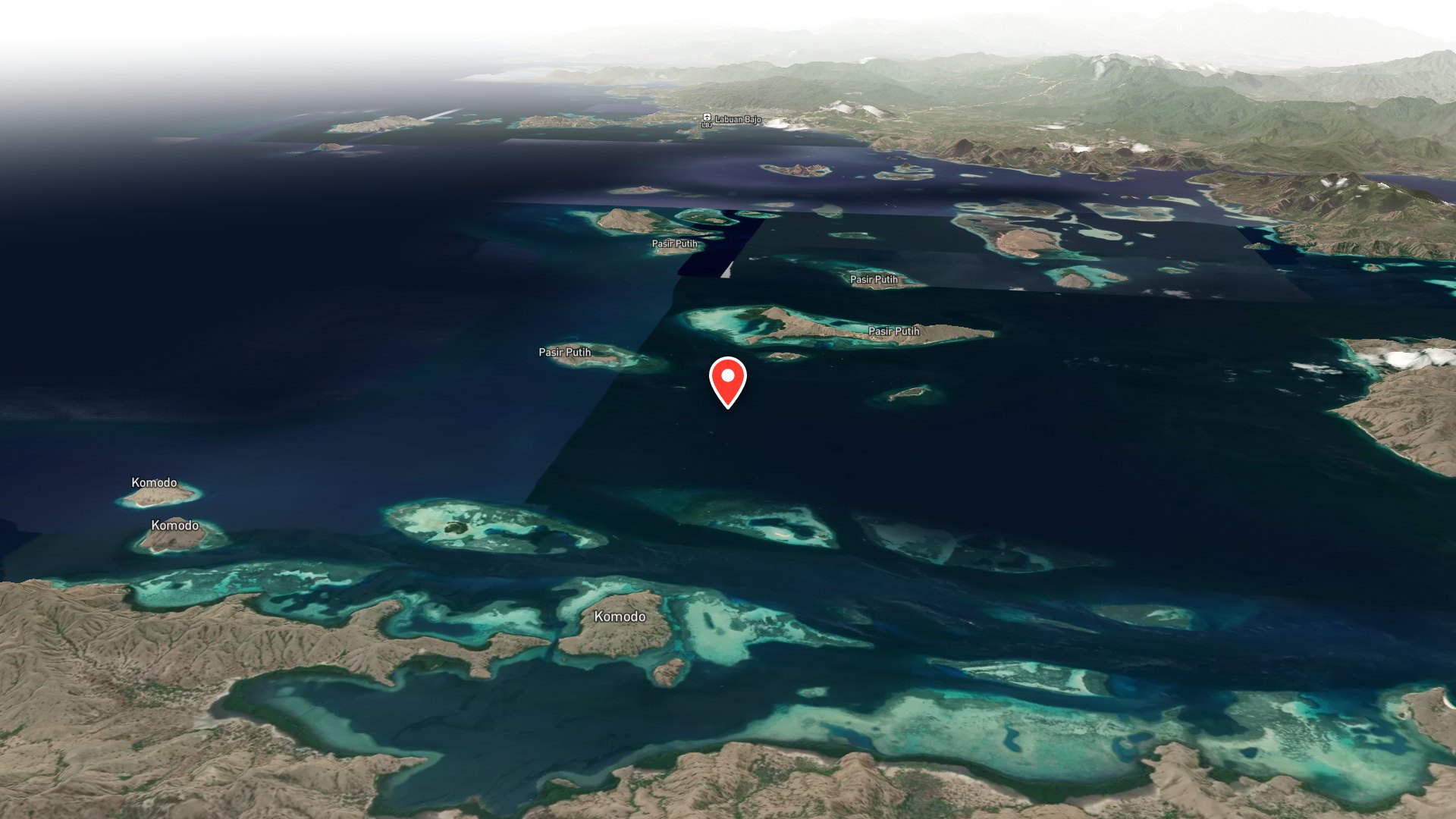
Komodo sits at one of the most dramatic oceanographic crossroads on the planet. Positioned between the Indian Ocean and the Pacific, it is a dynamic mixing zone where the Indonesian Throughflow pushes nutrient-rich water through narrow channels — and the result is nothing short of extraordinary. The park is home to over 1,000 species of fish, 260 species of coral, and 70 species of sponges, and in 1991 its exceptional biodiversity was recognised by UNESCO, which awarded it World Heritage status.
What to Expect Underwater
High-speed currents or gentle drift dives, colourful walls with monumental boulders, endless valleys of coral gardens, seamounts and pinnacles — Komodo boasts it all. Top dive sites include Batu Bolong for vibrant coral and fish life, Castle Rock for thrilling currents and large pelagics, Manta Point for manta rays, and Crystal Rock for clear visibility and diverse marine life. Dives can range from relaxed, easy-going, shallow macro dives to highly challenging, deeper dives in current — meaning there is genuinely something here for every level of experience.
Diving in Komodo offers a layered ecosystem where macro and pelagic life coexist. Keep your eyes peeled for plankton-filled water drawing in filter feeders like manta rays, which in turn attract reef sharks and giant trevally. Macro fans will delight in unique species like nudibranchs and pygmy seahorses, along with vibrant coral reefs. While manta sightings are common — especially at Manta Point — the best months for encounters are December to February when the cleaning stations are busiest.
Conditions & Currents
Komodo rewards the prepared diver. Strong lateral currents, occasional downcurrents at pinnacles, and unpredictable "washing machine" effects in channels where opposing flows meet are all common. Water temperature varies from 22°C in the nutrient-rich south to 29°C in the warmer north, and most dives are between 18 and 30 metres deep, though during plankton blooms visibility can drop below 10 metres. Between April and November, visibility tends to be clearer with more predictable conditions; from January to March, sea conditions are often calmer.
Operationally, negative entries — rolling off the boat and descending immediately — are common at exposed sites, reef hooks allow divers to hold position at cleaning stations without harming coral, and a surface marker buoy (SMB) is essential on every dive as boats regularly pick up divers away from the entry point.
Getting There
Most divers explore Komodo from Labuan Bajo, a coastal town on the western tip of Flores that acts as the main gateway to the park, with dive boats departing into the national park each morning. Many operators offer daily dive trips and liveaboard options, ranging from one-day dives to multi-day excursions — the latter being the best way to reach the more remote northern sites and dive on the tidal windows that matter most.
Recommended ISC Certifications
Given Komodo's strong currents, deeper pinnacles, and boat-based diving, the following ISC courses will put you in the best possible position: