
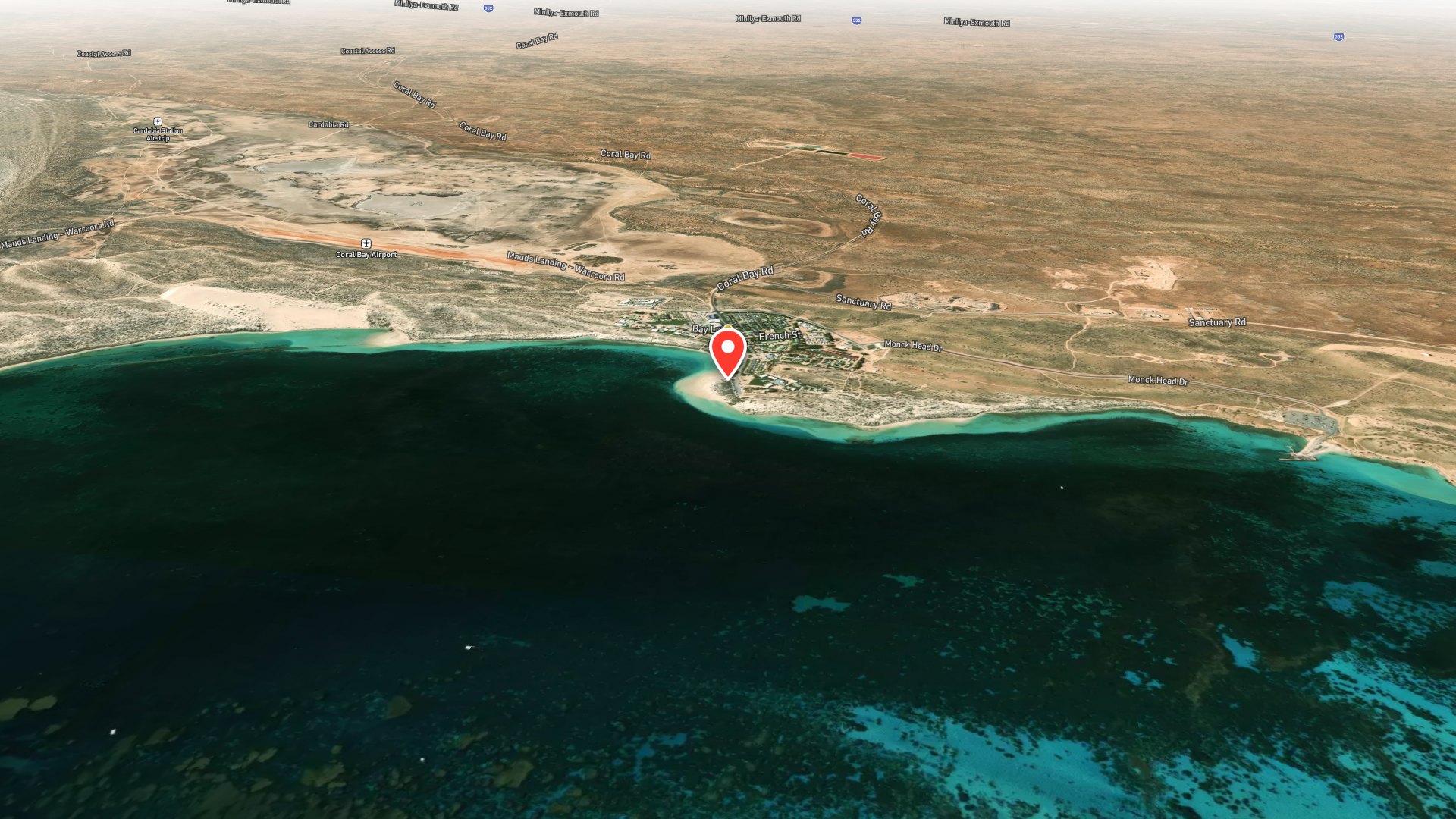
Ningaloo is Australia's only fringing reef — and the largest of its kind in the world. Unlike a barrier reef, it hugs the shoreline so closely that the outer reef can sit just 400 metres from the beach, making this one of the most accessible world-class reef systems on the planet. Stretching over 260 km along Western Australia's Coral Coast, this UNESCO World Heritage Site is celebrated for its crystal-clear waters, vibrant coral gardens, and headline encounters with whale sharks, manta rays, and turtles.
What to Expect Underwater
Colourful coral bommies rise just metres from the beach, and the fringing reef boasts extraordinary biodiversity — over 500 species of fish, over 300 coral species, and 155 species of sponges — thanks to the competing influence of the warm Leeuwin Current and the cooler Ningaloo Current. For scuba divers, most reef sites average 8–12 m, while outer reef experiences can reach up to 25 m. Visibility is dynamic — up to 20–25 m on a good day, and averaging around 10–15 m. Most tours depart by boat, and outer reef trips venture into open ocean where conditions can vary considerably — from glassy flat to a couple of metres of swell on windier days.
Marine Life & Seasonal Highlights
The waters off Coral Bay support a year-round population of manta rays, green turtles, bottlenose dolphins, dugong, and reef sharks. The reef is home to over 500 species of fish, 300 coral species, and the majestic whale shark — the world's largest fish — which migrates through between March and July, while humpback whales pass by from June to November. A permanent population of reef mantas feeds along the coast, and a rare giant oceanic manta will occasionally visit. Timing your trip to catch the extraordinary phenomenon of coral spawning — the reef's annual breeding ritual in March, precisely seven days after the full moon — is an experience few divers ever forget.
Conditions & Getting There
The best diving season runs from March to October, offering warm waters, excellent visibility, and calm sea conditions. Water temperatures range from 25–28°C February to June, cooling to 18–24°C July through January — a 3 mm full wetsuit suits the warmer months, while a 5 mm is more comfortable mid-winter. The Ningaloo coast is exposed to wind and swell during the winter months, and summer is cyclone season for the northwest of the state. Reaching the reef is an adventure in itself — the closest airport is Learmonth (LEA), just 36 km south of Exmouth, with direct flights from Perth. Coral Bay itself sits approximately 1,200 km north of Perth, or 150 km south of Exmouth.
Recommended ISC Certifications
Ningaloo suits divers of all levels, but the right training will unlock the full experience — from shallow lagoon bommies to outer reef walls and open-ocean megafauna encounters.
Open Water Diver — the minimum certification to join guided reef dives; the shallow inner reef is perfect for newly certified divers building confidence.
Boat Diver — ISC's Boat Diver course is highly relevant here; virtually every dive at Ningaloo departs by vessel, and understanding boat protocols, entries, and SMB deployment is essential.
Deep Diver — outer reef dives can reach up to 25 m, making the ISC Deep Diver specialty a smart step up for divers wanting to explore the deeper reef structures.
Drift Diver — ISC's Drift Diver course covers key skills including buoy deployment, reel and line use, and buoyancy control in moving water — all highly applicable on current-swept outer reef passes.
Nitrox Diver — with multiple dives per day on offer, ISC's Nitrox Diver certification extends your no-decompression limits and shortens surface intervals, letting you spend more time on the reef.
Optimum Buoyancy — ISC's Optimum Buoyancy course is an ideal preparation for Ningaloo's pristine, protected coral gardens, where precise buoyancy is both a courtesy to the reef and a requirement for responsible diving in a World Heritage Area.